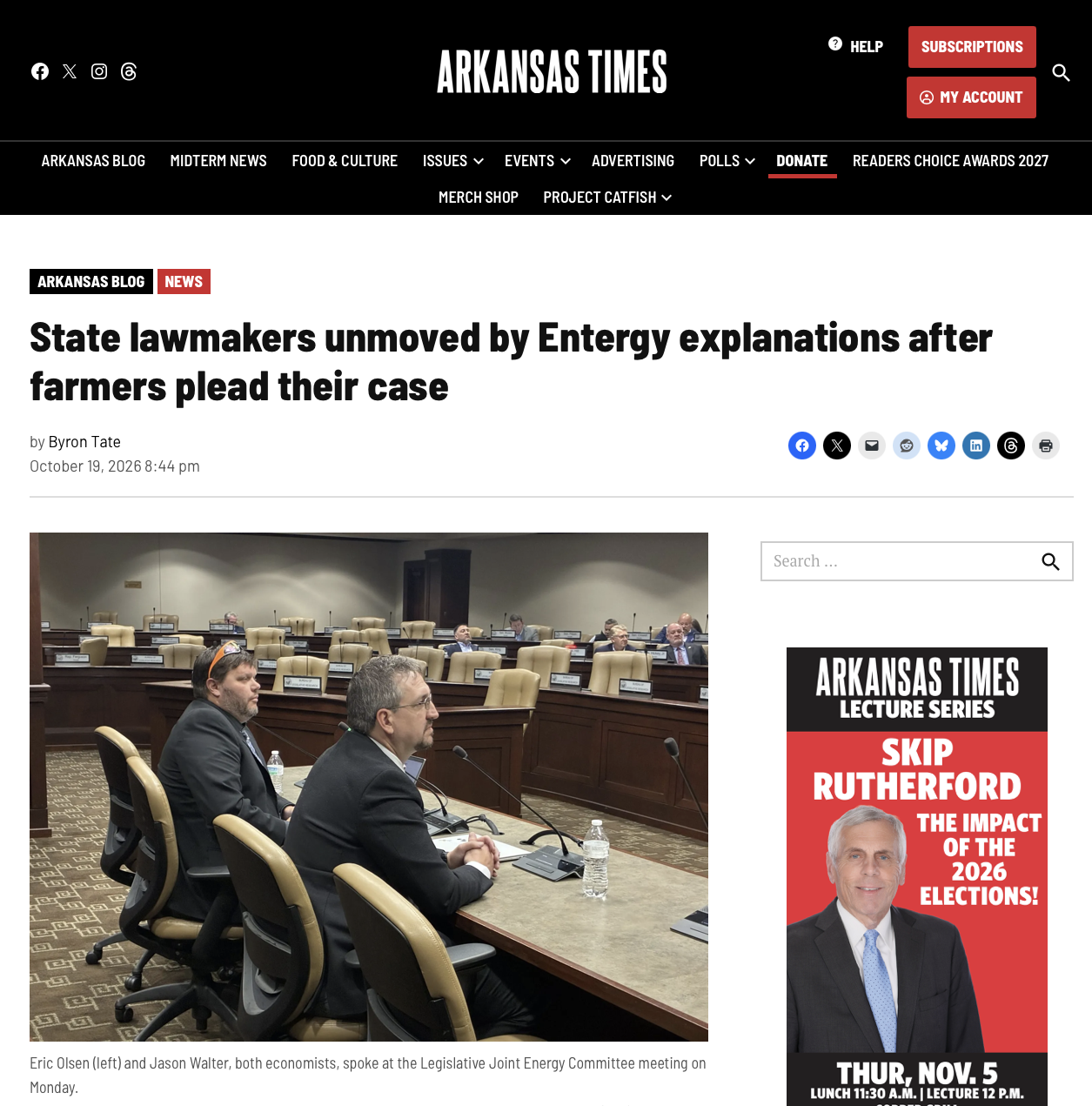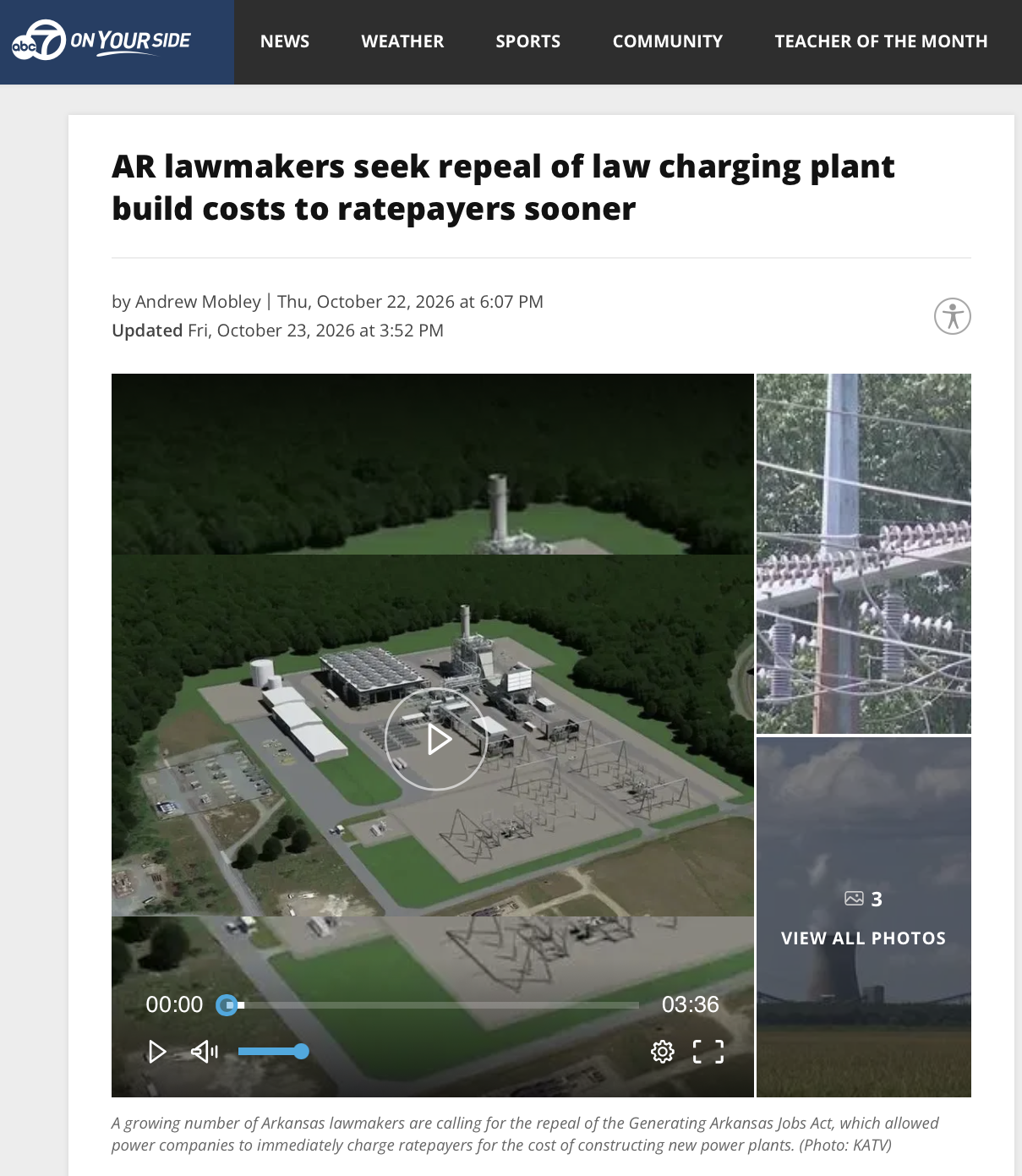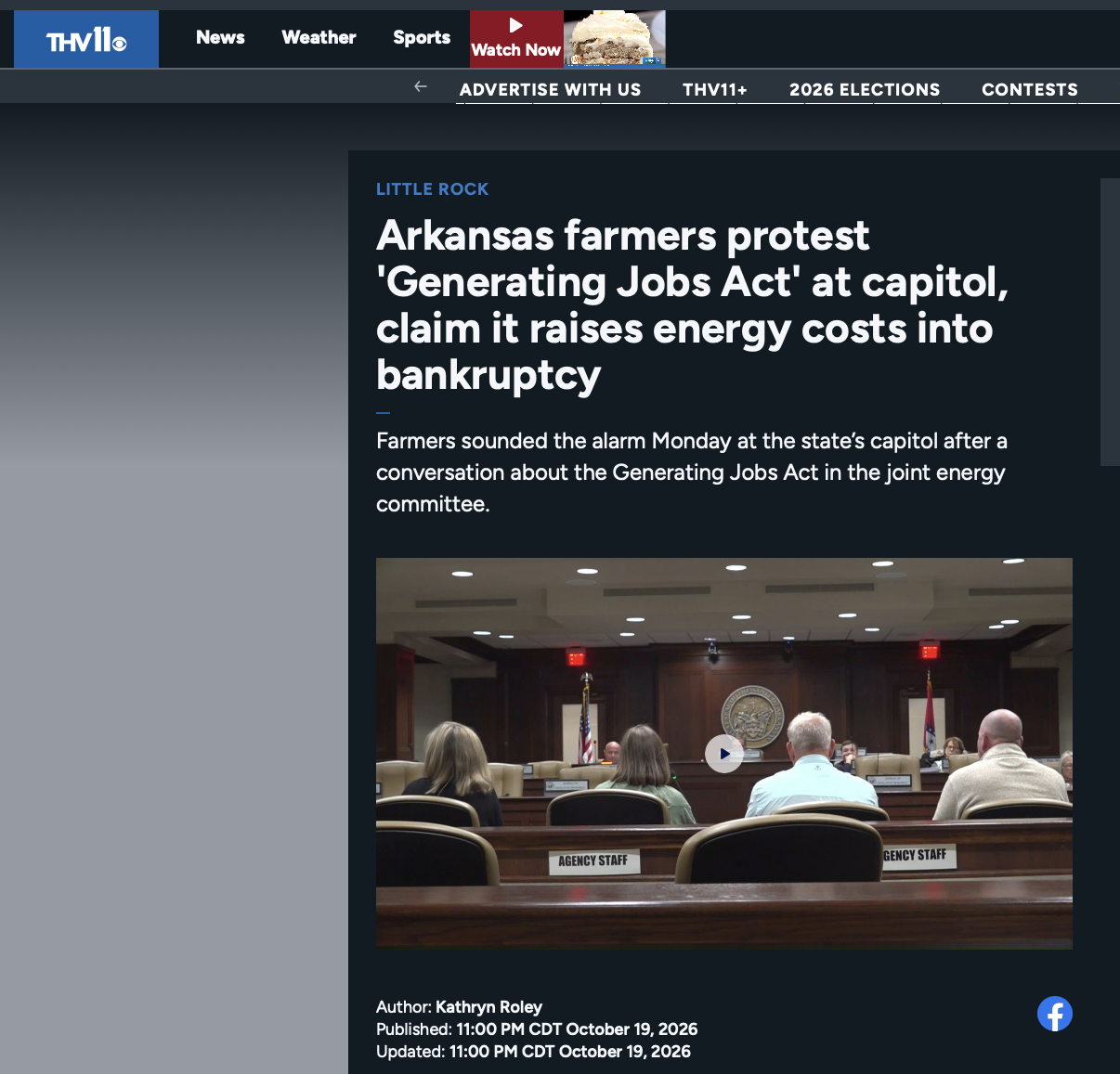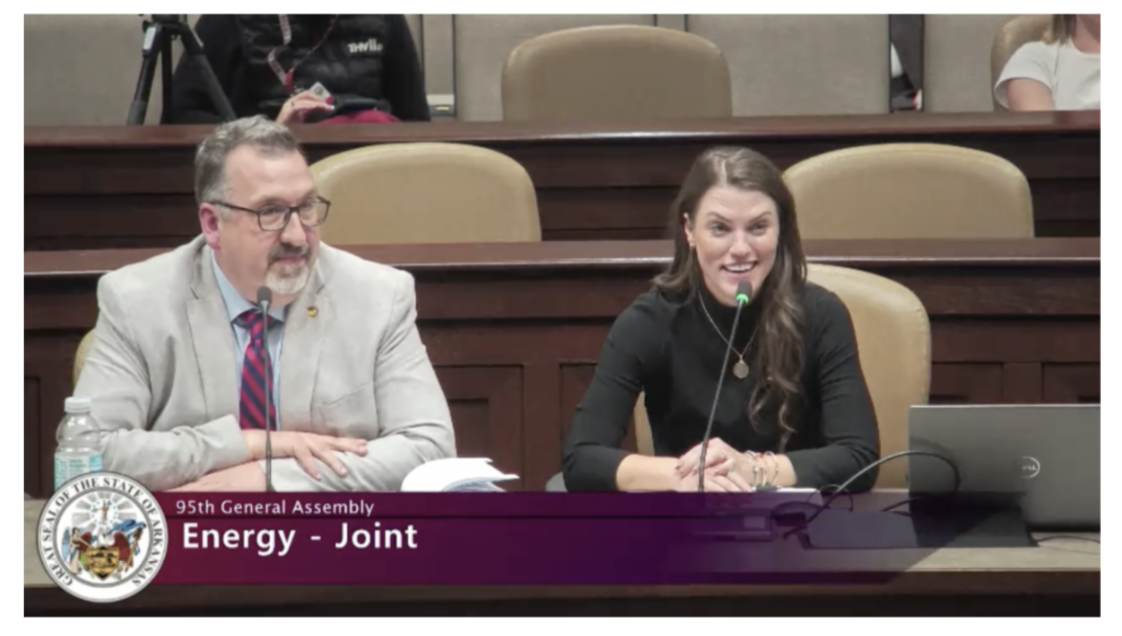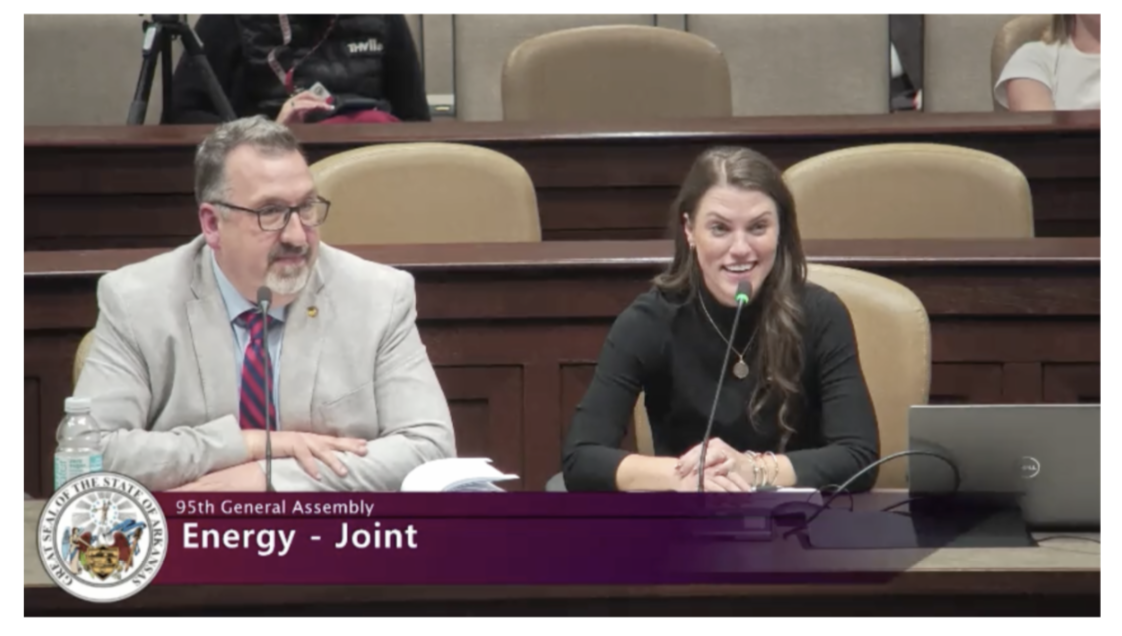
The Arkansas Legislature's Joint Committee on Energy met Monday, October 19, for an in-depth discussion of the Generating Arkansas Jobs Act (GAJA), rising electricity costs and how Arkansas can meet growing energy demand while protecting existing customers. Arkansas Advanced Energy Executive Director Lauren Waldrip testified alongside AAEA member Walmart, following presentations from the Arkansas Public Service Commission and economists. The Committee also heard from Arkansas farmers, electric cooperatives and Entergy Arkansas.
What’s the Generating Arkansas Jobs Act and Why is it on My Electric Bill?
Arkansas needs more power, and more ways to get it. AAEA emphasized that GAJA is a financing mechanism, not an energy strategy. Entergy's own resource planning projects an energy deficit beginning in 2027. The discussion highlighted additional options for bringing generation online, including behind-the-meter generation, customer-supplied resources and competitive procurement.
Ratepayer protections are emerging as a priority for 2027. Much of the discussion focused on who should bear the cost and risk of new generation. AAEA advocated for stronger protections when customers are asked to finance infrastructure years before receiving power from it, including appropriate recognition of financial commitments from the large customers driving new investments.
Arkansas's electric cooperatives offered an alternative model. Arkansas Electric Cooperatives testified that they do not plan to use the GAJA rider. Instead, their large-load tariffs can require deposits, contributions in aid of construction, surety bonds and other financial assurances designed to protect existing members from costs created by new large loads. The cooperatives are also developing new generation without using GAJA.
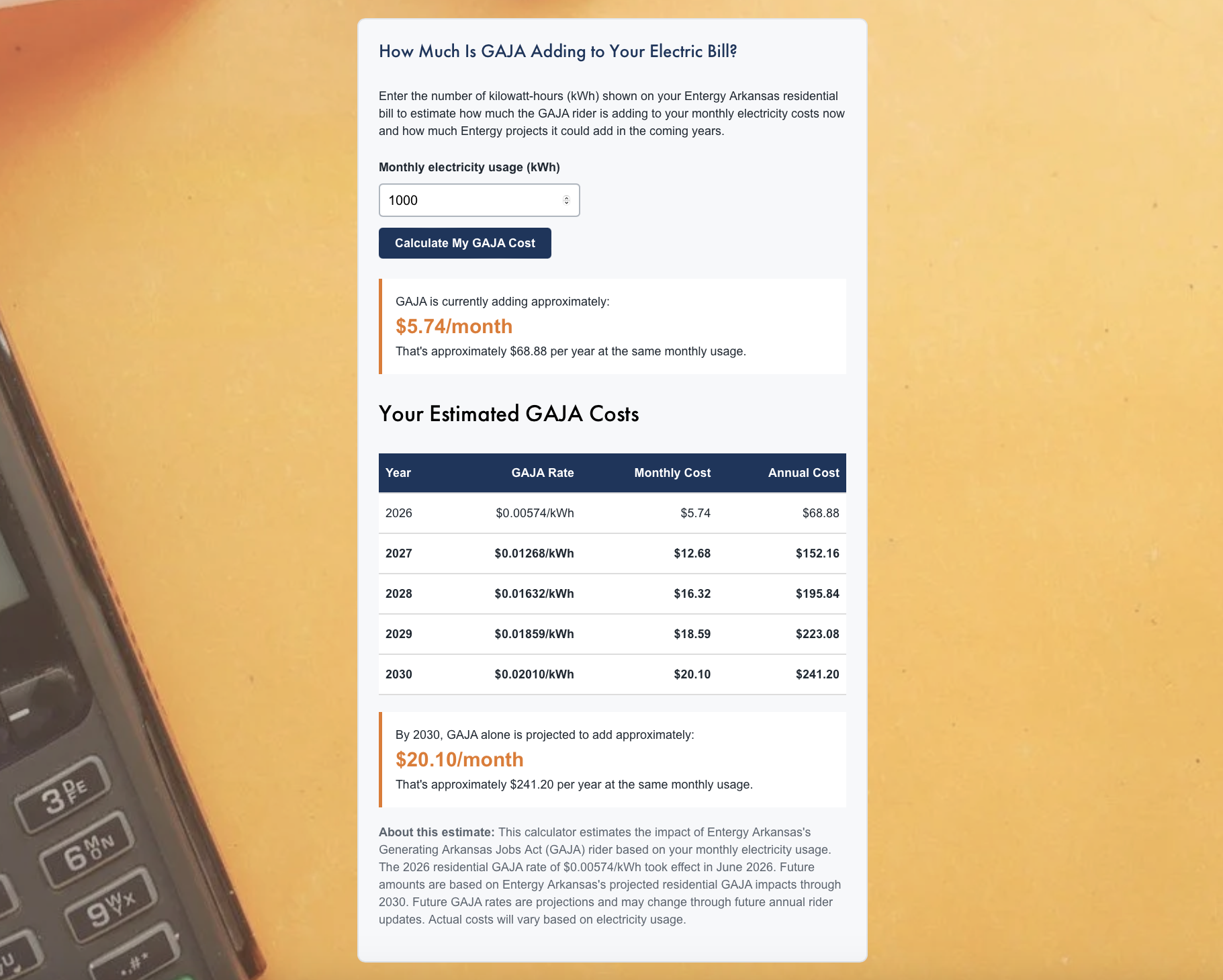
How Much is GAJA Adding to Your Electric Bill?
Affordability is an economic development issue. Walmart testified that its average electricity cost per kilowatt-hour in Arkansas has increased more than 20% over the past five years and is approximately 20% higher than its cost in Texas. For Arkansas to remain competitive, energy policy must work for both the businesses we are working to attract and those already investing and employing people here.
One question remains central: When do existing customers actually come out ahead? Entergy maintains that GAJA reduces long-term financing costs. Legislators repeatedly asked how much customers will pay during construction and when the benefits they receive will exceed those payments. That question, including the opportunity cost of customers' money, remains an important part of the discussion heading into the 2027 legislative session.
What's Next
The hearing made clear that energy policy will be a significant issue in the upcoming legislative session. AAEA will continue advocating for policies that expand Arkansas's ability to add needed generation, protect existing customers, maintain affordability and reliability, and support long-term economic growth.