

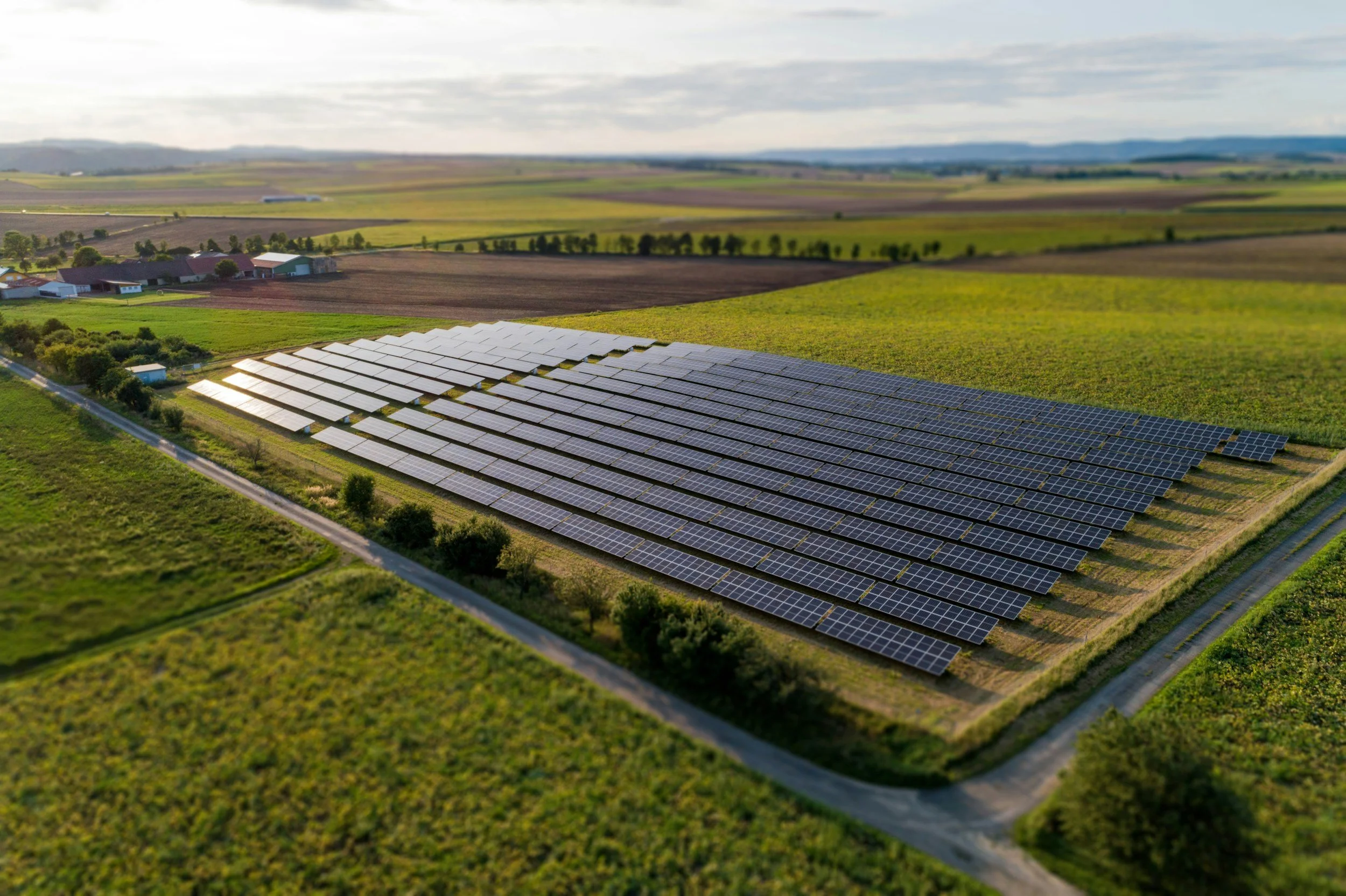
Own the land, own the opportunity.
Landowners across the Southeast have long relied on income from leases - whether for timber, farming, hunting, or mineral rights - to sustain generational land ownership. Utility-scale solar leases work the same way and offer a powerful way to generate income, preserve farmland, and invest in the future of rural communities across the Southeast. As solar energy production has ramped up, concerns over the displacement of agricultural land for non-food production purposes have also ramped up.
Land use studies from Arkansas, Georgia and Tennessee are helping piece together a more nuanced picture: solar’s economic promise for the Southeast is real, but the path we choose for land use and policy will decide how clearly that promise becomes reality in rural communities.
Know the facts.
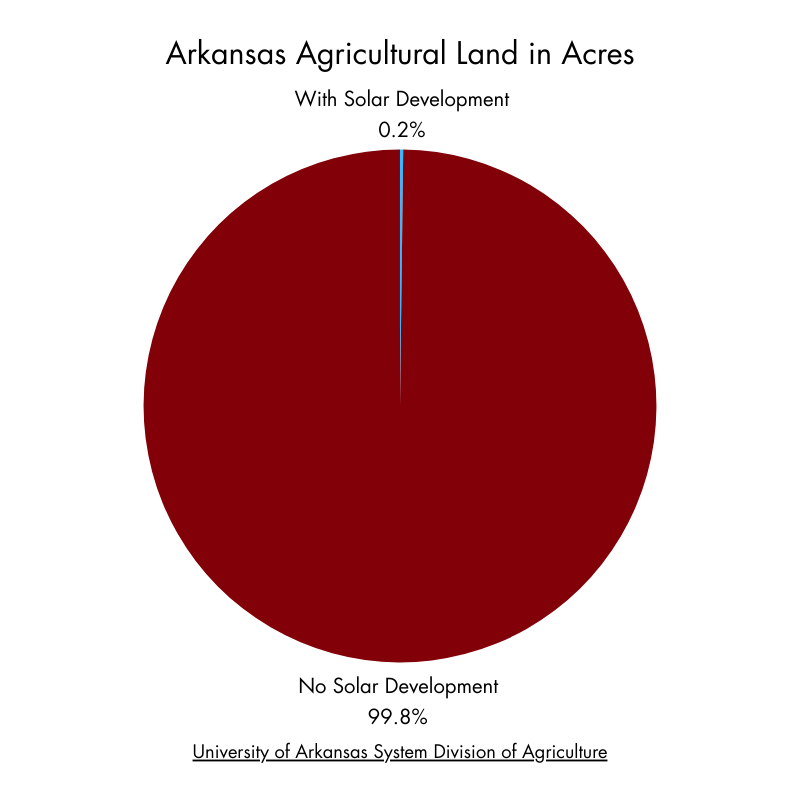
According to an analysis released in Spring 2025 by the University of Arkansas System Division of Agriculture, large scale solar arrays occupy only about 0.2% of the 13.7 million acres of agricultural land in Arkansas, despite recent rapid growth in the solar sector.
Private landowners often lease land for solar development, sometimes over a 30-year contract, the study explained. Voluntary solar land leases range from $450 to $2,500 per acre, with a preference for cleared, leveled or southward sloping lands that are not wetlands.
According to the study, up to 133,500 acres of land would be required across the state to double the state's current electrical generating capacity with solar, offsetting demand for power from natural gas, coal, nuclear and hydropower during the day.
"Even under this extreme level of solar development, which is unlikely to happen, solar would use less than 1% of the 13.7 million acres of agricultural land," said Dr. Michael Popp, Professor Agricultural Economics and Agribusiness.
Lauren Waldrip, Executive Director of Arkansas Advanced Energy Association, says the latest report highlights Arkansas farmers’ reality: “Farmers are doing everything right, but the math isn’t working anymore.” She notes agriculture is Arkansas’s largest industry and family farms are the lifeblood, adding that energy and food are complementary, not competing. As we move into 2026, she argues renewable energy projects can help keep farms productive, safe, and reliable while boosting the state’s energy economy.
The Opportunity
Utility-scale solar is an opportunity for Southeast communities. It provides long-term lease income to local families, generates tax revenue for public services, and supports job creation in rural areas.
But none of this is possible without clear, fair rules that empower landowners—not restrict them.
Adopting smart ordinances that encourage investment while protecting their citizens is the way county and parish officials can uphold one of the region’s most cherished values—the right of every landowner to decide how best to use their land.

Ready to learn more?
About Arkansas Advanced Energy
Arkansas Advanced Energy supports innovations to achieve a secure, clean, and affordable energy future for all Arkansans by serving as the business voice for advanced energy and providing research, public education programs and economic and workforce development.
About Powering Arkansas
Powering Arkansas serves Arkansans by advocating for an affordable and resilient grid. We believe reliable electricity is foundational to families’ well-being and to local economies. By uniting policymakers, communities, and developers, we work to strengthen the grid so outages are shorter and less frequent. Our goal is to empower every neighborhood - from rural towns to urban centers - with access to dependable power, reduce energy burdens, and build resilience against rising energy costs and extreme weather. Powering Arkansas is a project of the Southern Renewable Energy Association, an organization representing renewable energy stakeholders across the Southeastern United States.